At a Glance: Key Takeaways
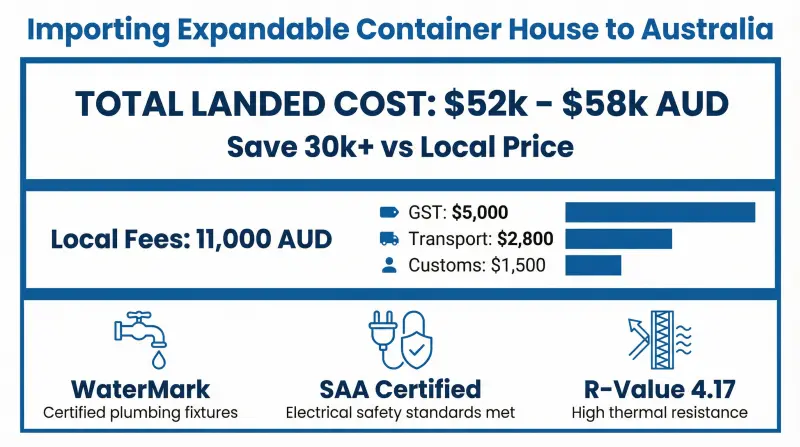
- Estimated Local Fees: AUD 10,000 – 12,000 (for a 40ft unit).
- Typical Landed Cost Range: AUD 52,000 – 58,000 (Total investment for a compliant 40ft unit).
- Potential Savings: AUD 30,000+ compared to local Australian resellers.
- Non-Negotiables: WaterMark, SAA, R-Value (Insulation), and Waterproofing.
Introduction
The demand for expandable container houses in Australia is surging, driven by the need for affordable granny flats and secondary dwellings. While the factory price in China is highly attractive, the "landed cost" in Australia involves complex taxes, port fees, and strict compliance standards.
To help you navigate this process, we have synthesized real data from Australian owners (Sydney, Melbourne, and Townsville) into this authoritative guide on importing a 20ft expandable container house or a 40ft unit.
Phase 1: Critical Compliance (The Deal-Breakers)
Before discussing price, you must ensure the unit can be legally installed. Australia has some of the strictest building codes in the world.
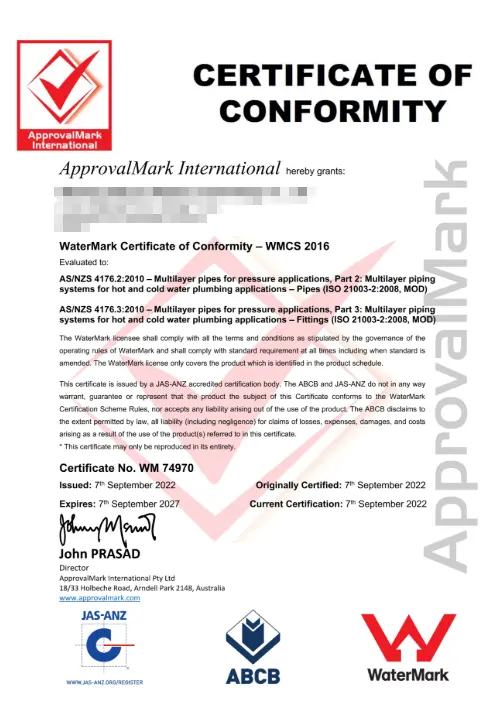
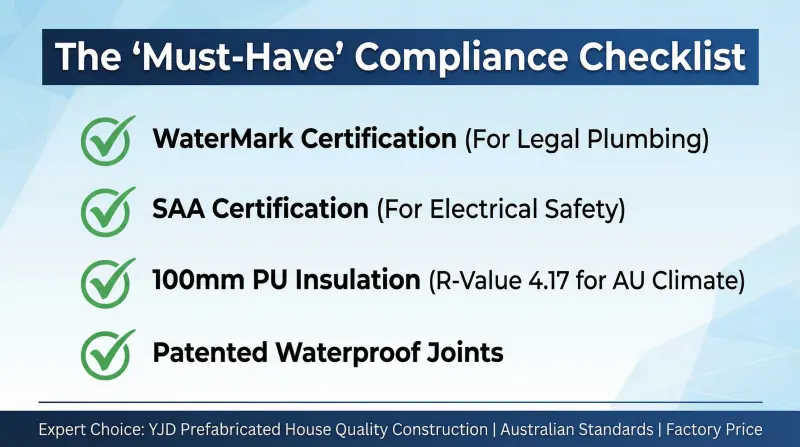
1.WaterMark and SAA Certification
Connecting a granny flat to mains power or water requires a licensed plumber and electrician. In Australia, they are legally restricted from installing products that lack WaterMark (plumbing) and SAA (electrical) certification.
The Risk: Without these, your home may be uninsurable and the Council may order its removal.
Industry Standard: Always confirm that your supplier provides pre-fitted, certified components. At YJD, we ensure all Australian-bound units meet these specific AS/NZS standards to guarantee a legal connection.
2.Insulation & R-Values (Energy Ratings)
Australia's Climate Zones require specific Thermal Resistance (R-values). Many standard units use thin EPS foam, which is insufficient for the Australian sun.
Compliance Tip: Check if the wall and roof panels meet the energy rating required by your local Council.
Performance: For high-performance insulation, we offer 100mm PU (Polyurethane) panels, achieving an R-value of 4.17 (Metric). This level of thermal efficiency is essential for long-term comfort and BCA (Building Code of Australia) compliance.
Phase 2: Total Landed Cost Analysis (The "Hidden" Fees)
Understanding the import container home Australia cost requires looking beyond the shipping quote.
Estimated Local Fee Breakdown (AUD)
Based on aggregated data from 2024-2025 imports, here are the typical expenses once the container reaches an Australian port:
| GST (Tax) |
$4,500 – $5,500 |
Typically 10% of (CIF Value + Duty + Insurance). |
| Wharf & Port Fees |
$950 – $1,200 |
Shipping line terminal handling charges. |
| Customs & Storage |
$350 – $500 |
Mandatory quarantine/inspections and short-term storage. |
| Land Transport |
$2,000 – $3,500 |
From wharf to property (varies by distance). |
| Customs Broker/Agent |
$1,200 – $1,800 |
Professional handling of import declarations. |
Total Estimated Local Fees: AUD 10k – 12k.
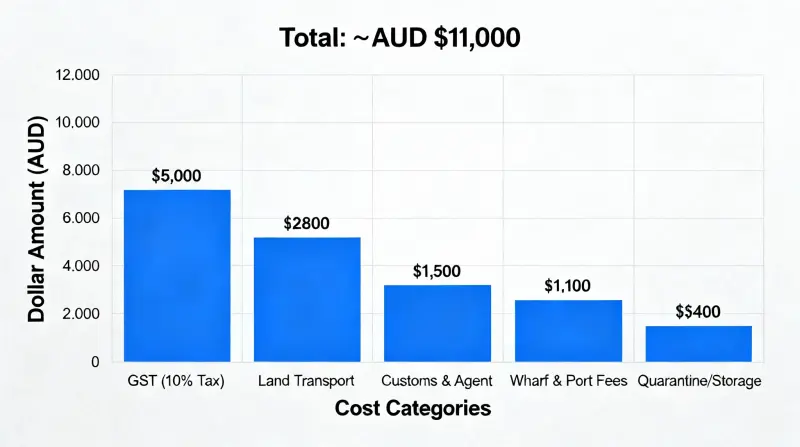
Disclaimer: These figures are estimates based on owner reports. Exact costs depend on your specific freight terms (FOB/CIF) and local delivery conditions.
Phase 3: Long-term Quality & Installation Experience
Once the house is on your land, the focus shifts from "legal" to "livable."
1.Structural Waterproofing
Expandable units have multiple joints that are vulnerable to heavy rain.
The Industry Solution: Look for integrated drainage systems rather than just external sealant.
📖 Technical Insight: For a deeper look at structural waterproofing, see our guide on Why expandable container homes leak and how to fix them forever.
2.Installation Support
A major frustration for many importers is receiving a 20ft expandable container house with no assembly instructions.
Best Practice: Ensure your manufacturer provides both a physical manual and digital video support.
📖 Step-by-Step Guide: You can view our public installation walkthrough here to understand the labor required.
Phase 4: Planning & Council Approvals
Navigating local Council regulations is often the most challenging part of the journey.
Compliant Pathways: Different regions have different rules for granny flats. We recommend engaging a Private Certifier early in the process. They can often identify compliant pathways under "Temporary Accommodation" or "Secondary Dwelling" clauses that may apply to your specific site.
Site Preparation: Ensure your land is leveled and you have pre-booked a forklift or crane for the day of delivery.
Conclusion: Is Importing Right for You?
Directly importing an expandable container house can save you significantly, but it requires due diligence. Success depends on choosing a manufacturer that understands Australian building standards, provides the necessary certifications (SAA/WaterMark), and offers high R-value insulation.
Considering a project for 2025?
Contact the YJD technical team for a detailed compliance checklist and a customized cost estimate for your location.
What is a Granny Flat? The Ultimate Introduction to Secondary Dwellings
YJD Expandable Houses: 2025 Market Outlook & Buyer ROI